Sustainable Tourism in Egypt: Our Commitment
Tourism saved a lot of Egyptian families through the lean years and strained a lot of Egyptian sites in the good ones. Rafiky was built on the bet that those two things don't have to come as a package. This is what we mean when we say "sustainable tourism," and what we're doing to make it more than a tagline.
Money stays local
Every booking on Rafiky goes through a local provider — a guide, a host, a shopkeeper, a small operator — not a foreign middleman. The fee we keep covers payment processing and platform upkeep; the rest of the trip's value lands directly in the community that hosted it.
Hand-vetting, not gatekeeping
We onboard providers one at a time. We meet them, we check their licenses, we talk to past travelers. The goal isn't to be picky for its own sake — it's to make sure the people you're trusting with your trip are the people their neighbors already trust.
Light footprints on heavy sites
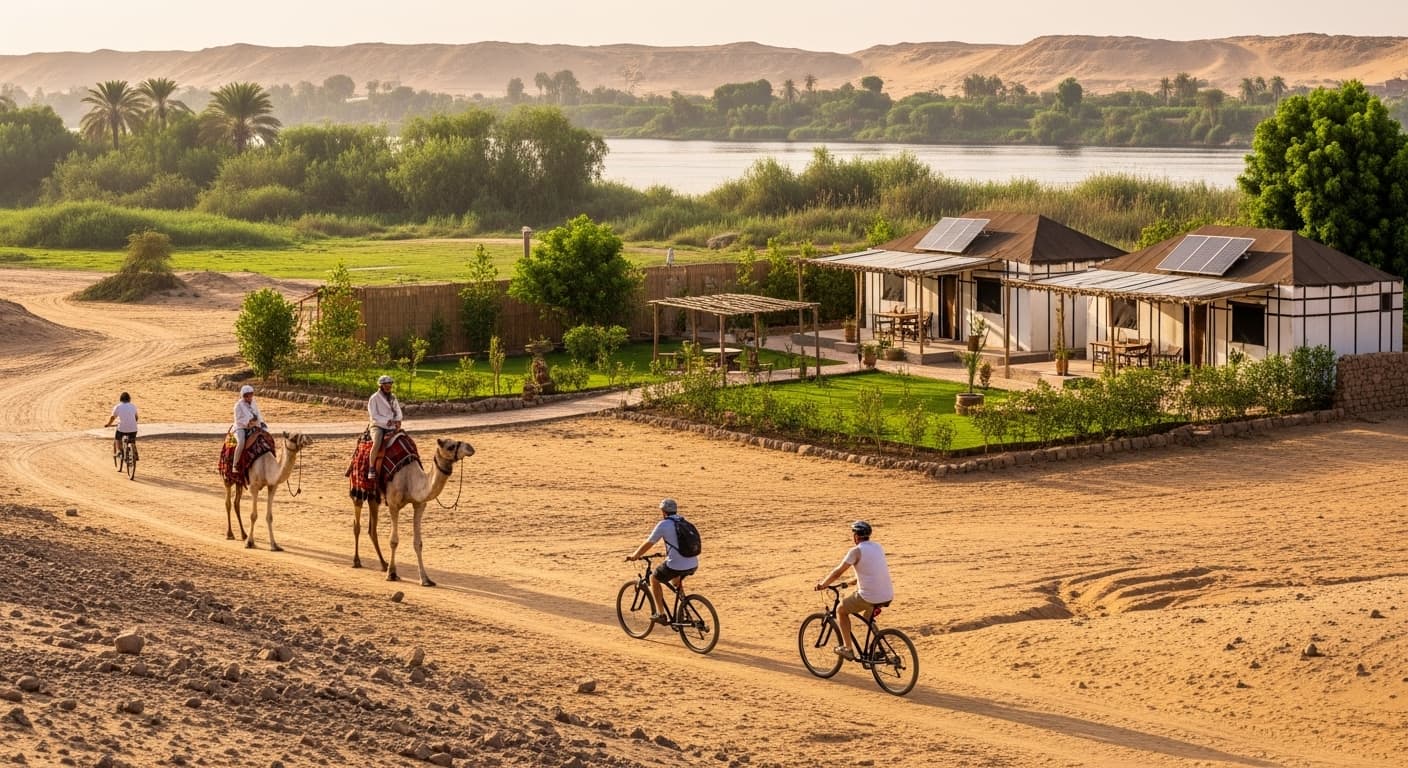
Where we work with high-traffic sites (Giza, Luxor, Abu Simbel) we nudge travelers toward lower-impact windows: early-morning visits, small-group tours, walking instead of motorized routes. We surface hidden alternatives where they exist — Saqqara before the pyramids, Dendera before Karnak — to spread the load.
Heritage in the long run
A share of every transaction on Rafiky goes to a local heritage fund that supports preservation work and craft apprenticeships. The old trades that make a place feel like itself — the silversmiths, the calligraphers, the felucca builders — are exactly what gets lost first when tourism turns into a conveyor belt. Keeping them alive is part of the platform, not a side project.
What we ask of travelers
Be curious, be patient, tip generously, learn three words of Arabic. The rest of the work is ours.