
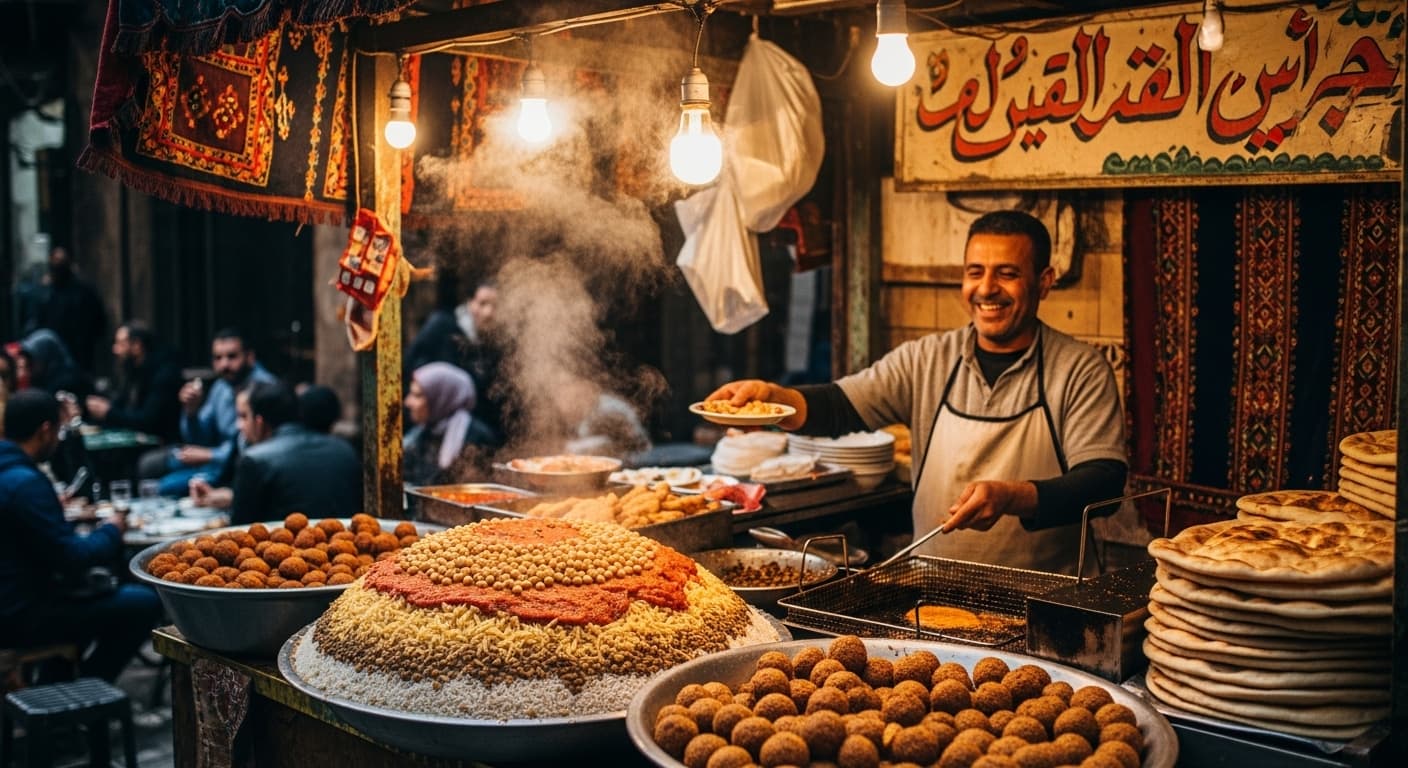
The Ultimate Guide to Egyptian Street Food
Egypt's street food scene is a thousand-year-old conversation between empires, traders, and home cooks. Walk any Cairo alley after sunset and you'll smell what every traveler before you has smelled: cumin sizzling in oil, bread puffing on hot stone, syrup darkening over a copper pot. This guide is a starting map.
Koshari — the national plate
Lentils, rice, macaroni, chickpeas, fried onions, tomato-vinegar sauce. Cheap, filling, and the dish every Egyptian will fight you about. Try it at Abou Tarek (downtown Cairo) for the canonical version; try it at any neighborhood hole-in-the-wall for the version locals actually eat on a Tuesday.
Ful medames and ta'ameya
Slow-cooked fava beans drizzled with olive oil, lemon, and cumin. Pair with ta'ameya — Egypt's herb-green answer to falafel, made with fava beans instead of chickpeas. Eat both wrapped in baladi bread for the breakfast every Cairo office runs on.
Hawawshi and feteer
Hawawshi is spiced minced meat baked into bread until the crust crackles. Feteer meshaltet is a layered, paper-thin pastry that comes sweet (honey, cream) or savory (cheese, sausage). Both are best ordered at a baladi bakery that's been open since before you were born.
Sweet endings
Om Ali for the family-table dessert. Basbousa for the syrup-soaked semolina. Kunafa for the cheese-pulled hero shot. None of these travel well — that's why eating them in Egypt is its own reason to come.
How to eat well
- Follow the queue, not the guidebook.
- Order what the regulars order; the menu is a starting point.
- Bring small bills. Most stalls don't break notes over EGP 50.
- Walk it off afterward. The food is heavy on purpose — you're meant to keep going.